On this page
- Start with the business problem, not the technology
- What is a ready-made tool?
- Choose a ready-made tool when
- What is custom software?
- Choose custom software when
- What is an AI agent?
- Choose an AI agent when
- The simplest way to choose
- 1. Is the job already common and well served?
- 2. Is the way you do the job a meaningful part of your business?
- 3. Does the job require repeated judgment or work with messy information?
- A practical comparison
- Common mistakes to avoid
- Buying a tool because the demo looked impressive
- Building custom software before the business can explain the job clearly
- Asking an AI agent to make high-risk decisions without review
- Treating AI as a replacement for a broken business process
- How Dreamcode approaches the decision
- Ready to choose the right solution?
When a business has too much admin, slow replies, scattered customer information, or staff doing the same thing repeatedly, the answer is not automatically “build an app” or “use AI.”
The useful question is: what kind of help does this job actually need?
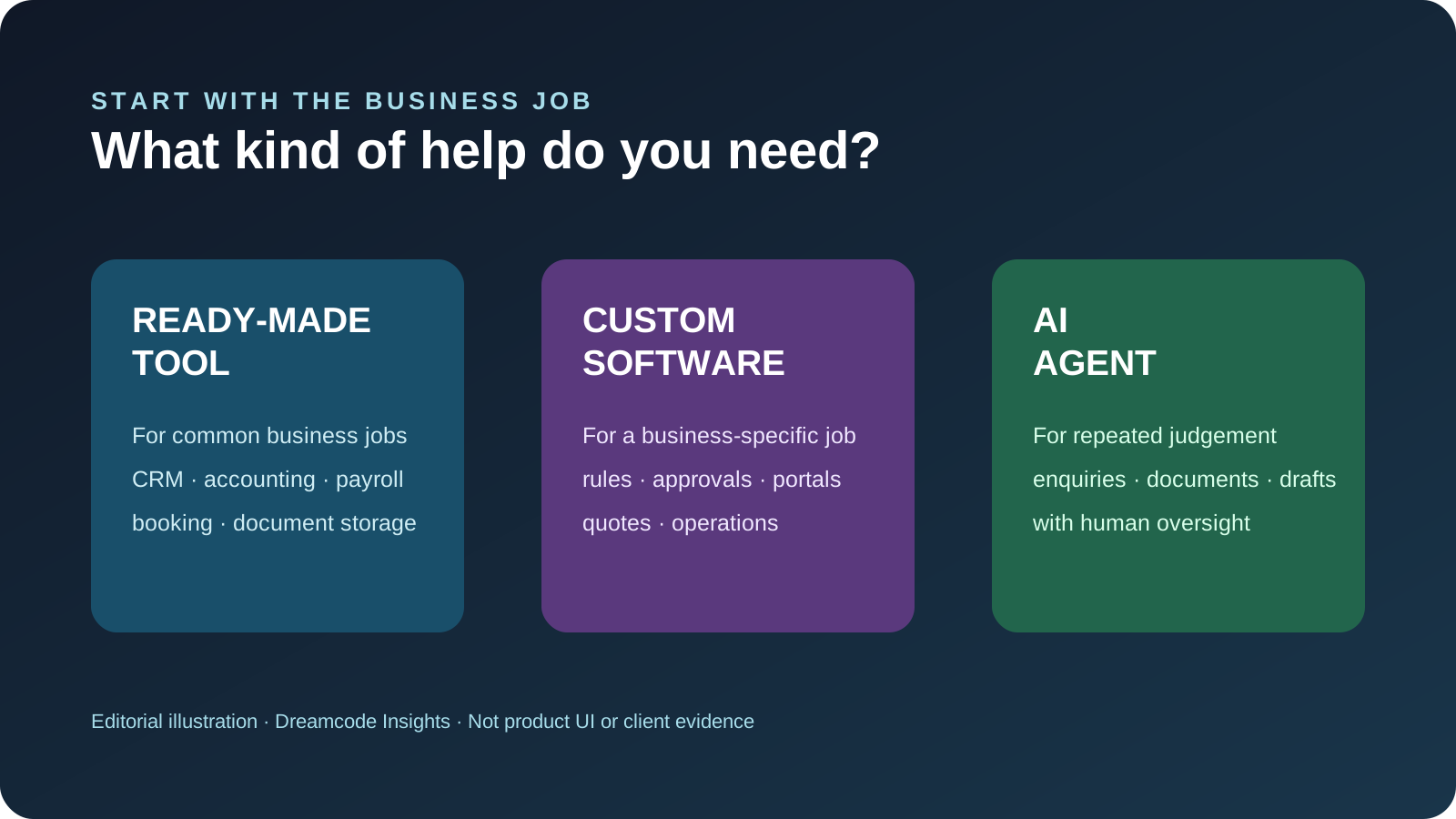
You may need a ready-made tool, custom software, or an AI agent. They solve different problems:
- A ready-made tool gives you a proven system that many businesses already use.
- Custom software gives you a system built around the way your business needs to operate.
- An AI agent can read, decide, draft, check, and take actions across your existing tools—within rules and human oversight.
Quick answer: buy a ready-made tool for common business jobs; build custom software when the way you run the business is genuinely different; use an AI agent when the job involves repeated judgment, messy information, conversations, or decisions that cannot be reduced to a fixed checklist.
Start with the business problem, not the technology
Suppose your team receives enquiries through WhatsApp, email, forms, and phone calls. Someone has to read each request, work out what the person needs, check whether the lead is suitable, prepare a reply, update a spreadsheet or CRM, and pass it to the right person.
There are several possible fixes:
- Buy a CRM if the business mainly needs one place to store leads and manage follow-ups.
- Build custom software if quoting, job allocation, approvals, customer records, and delivery must work in a way ordinary CRMs cannot support.
- Use an AI agent if the team spends hours reading enquiries, finding information, preparing first replies, summarising conversations, or deciding what should happen next.
The same business problem can need different solutions. That is why choosing the technology first often creates an expensive project that does not remove the real headache.
What is a ready-made tool?
A ready-made tool is software you subscribe to or buy and start configuring straight away. Examples include accounting systems, CRMs, payroll systems, project-management tools, booking systems, document storage, and help desks.
It is usually the best first choice when the job is common and the business does not need to do it in a very unusual way.
Choose a ready-made tool when
- you need a standard function such as accounting, payroll, CRM, bookings, or document storage
- a reputable product already covers the important features
- your team can adapt to the product without causing major problems
- speed matters more than a perfect fit
- the tool has suitable permissions, exports, support, and integrations
A ready-made tool is not a lesser choice. It is often the sensible choice when the business needs a dependable foundation quickly.
What is custom software?
Custom software is a system built specifically for your company. It could be an internal operations portal, a customer portal, a specialised quotation system, a field-service app, a dashboard, or a system that connects several parts of your business in one place.
It makes sense when your way of serving customers or delivering work is different enough that standard products create constant workarounds.
Choose custom software when
- staff keep forcing generic tools to fit a business-specific job
- the same information is copied between several systems every day
- your business needs particular approval rules, calculations, roles, or customer journeys
- the process is important to how you compete or serve customers
- you need control over the system’s roadmap, data, and user experience
Custom software is not about building everything from scratch. Often the best approach is to keep proven tools for standard tasks and build only the missing system that makes your business run better.
What is an AI agent?
An AI agent is more than a chatbot that answers one question. It is a system that can use instructions and approved tools to work through a task: read information, decide what it means, take the next permitted action, check the result, and ask a human when it reaches an exception.
For example, an AI agent could:
- read incoming enquiries and prepare a first reply using your approved information
- summarise long customer conversations for the sales or service team
- pull information from documents and put it into the right system
- classify support requests and route them to the right person
- check whether a quote, form, or record is missing key information
- create a draft follow-up for human review
AI agents are useful where the work involves language, documents, judgement, or many small variations. OpenAI and Anthropic both distinguish this kind of agentic work from fixed rule-based automation: agents use models and tools to handle tasks where the next step depends on the information in front of them. That is also why they need clear guardrails and human escalation for sensitive or high-risk actions.
Choose an AI agent when
- staff repeatedly read, interpret, summarise, write, or classify information
- the input is not always neatly structured in the same form
- a fixed “if this, then that” rule cannot cover the normal variations
- the agent can work from approved knowledge, systems, and permissions
- there is a clear person or team to handle exceptions and approve high-risk actions
An AI agent should not be used just because AI is fashionable. If a simple rule or ordinary software solves the job reliably, use the simpler solution.
The simplest way to choose
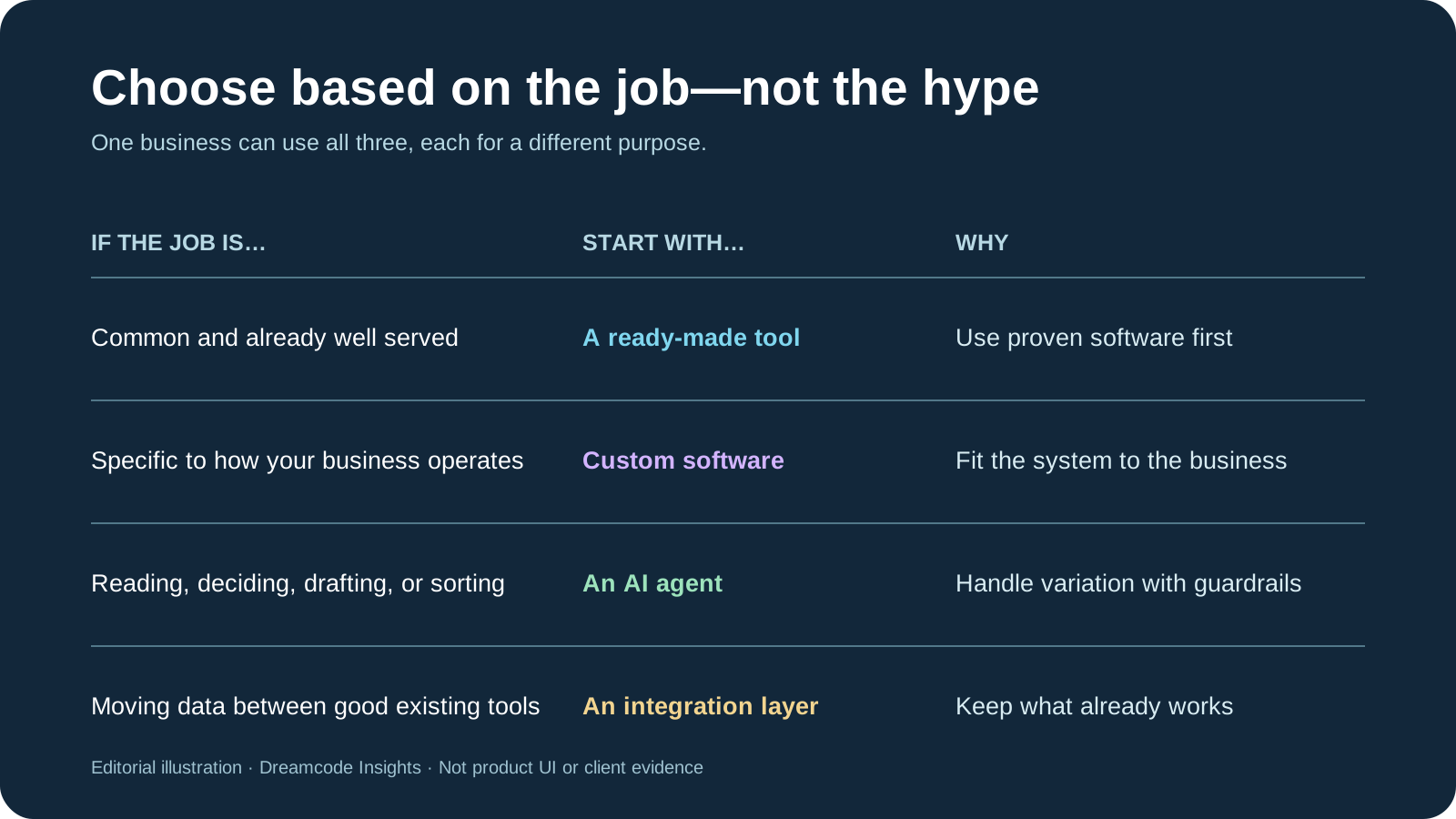
Ask these three questions about one specific business job.
1. Is the job already common and well served?
If the answer is yes, start by looking at ready-made tools.
For example: standard accounting, HR, payroll, basic CRM, file storage, and appointment booking rarely need a custom system on day one.
2. Is the way you do the job a meaningful part of your business?
If the answer is yes, custom software may be worth considering.
For example: a company may have a specialised quote-to-delivery process, unusual approval rules, different customer account structures, or operational requirements that generic software keeps getting wrong.
3. Does the job require repeated judgment or work with messy information?
If the answer is yes, an AI agent may help.
For example: deciding what an enquiry is about, extracting details from a PDF, drafting a response from company knowledge, or spotting missing information in a request are all tasks where an agent can assist—provided people remain in control of important decisions.
A practical comparison
| If your business needs to… | Start by considering… | Why |
|---|---|---|
| keep customer details and basic follow-ups in one place | a ready-made CRM | it is a common need with mature products |
| manage a unique quoting, approval, or job-delivery process | custom software | the system should fit the business, not force workarounds |
| read and respond to many different enquiries | an AI agent with human review | the task involves language, context, and judgement |
| move the same information between several existing tools | integration or a small custom layer | you may not need to replace everything |
| extract details from emails, PDFs, or forms and prepare the next step | an AI agent | the information is often unstructured and variable |
| replace a spreadsheet that has become the centre of operations | custom software or a configured platform | the right choice depends on how specific the business rules are |
The answer can also be a combination. A business may use a ready-made accounting system, custom software for its core operations, and an AI agent to help staff handle enquiries and documents. These tools should support each other rather than compete for attention.
Common mistakes to avoid
Buying a tool because the demo looked impressive
A good demo is not proof that the product fits your real customers, staff, exceptions, and reporting needs. Test the difficult cases before committing.
Building custom software before the business can explain the job clearly
If nobody can explain who does what, what counts as complete, and what happens when something goes wrong, building a system too early can turn confusion into expensive code.
Asking an AI agent to make high-risk decisions without review
Agents should have clear limits. Payments, customer commitments, sensitive information, and unusual cases need the right approval and escalation rules.
Treating AI as a replacement for a broken business process
AI can help people handle information and actions more effectively. It cannot decide the business rules, ownership, or priorities that management has not defined.
How Dreamcode approaches the decision
Dreamcode builds both custom software and AI agents. We do not start by forcing every problem into the same solution.
We first look at the specific job causing the most friction:
- What is staff doing repeatedly?
- What information do they need before they can act?
- Which decisions need human judgement?
- Which existing tools should stay in place?
- What is the smallest useful change that would save time or reduce mistakes?
That may lead to a ready-made tool, a custom system, an AI agent, or a combination of all three.
For a broader comparison of custom and off-the-shelf software, read Custom Software vs Off-the-Shelf Tools: How to Choose. If you are considering an AI initiative, How to Scope the First Version of an AI or Automation Project is a useful next step.
Ready to choose the right solution?
If you have a business task that is taking too much staff time or causing repeated mistakes, Dreamcode can help map the problem and recommend the right first move—whether that is a ready-made tool, custom software, an AI agent, or a smaller combination.